Learn how to protect and monitor your email security with our knowledge center. Increase your chances of landing in the inbox with the latest, actionable insights.
Cold email infrastructure is the technical foundation behind a reliable outbound email system. It includes sending domains, mailboxes, DNS authentication, email sequencing software, reputation management, warmup, tracking, monitoring, and the processes us
Every day, billions of emails are sent, and a significant share of them are forged. Spammers and phishers routinely spoof legitimate domains to trick recipients into clicking malicious links, handing over credentials, or wiring money to the wrong account.
DKIM fail means the receiving mail server could not successfully verify the DKIM signature attached to an email. The problem can occur because the DKIM record is missing, the selector is incorrect, the public key does not match the private key, DNS has no
Choosing the right email testing tool depends on what you are trying to fix. Some teams mainly need to know whether an email looks correct across Gmail, Outlook, Apple Mail, and mobile devices. Others need deeper checks for SPF, DKIM, DMARC, blacklists, s
Testing an email before sending it can prevent problems that affect inbox placement, rendering, engagement, and sender reputation. EmailGuard and Litmus both provide email testing tools, but they approach email health from different directions.
Maintaining healthy email infrastructure becomes more difficult as a business adds domains, sending platforms, mailboxes, and third party services. EmailGuard and Valimail both help organizations improve email authentication and protect their sending doma
Email deliverability is the ability of an email to reach the recipient's inbox instead of the spam folder. Global average inbox placement sits near 84%, so roughly one in six legitimate emails never reaches a human reader. This page covers the definition,
DMARC monitoring has become an important part of maintaining email security, deliverability, and domain reputation. Organizations use DMARC reports to understand which systems are sending email on their behalf, whether messages are passing SPF and DKIM au
DMARC is an important part of email authentication, but it only covers one layer of email health. A domain can have a valid DMARC policy and still face poor inbox placement, high bounce rates, spam filtering, blocklist issues, or problems with the quality
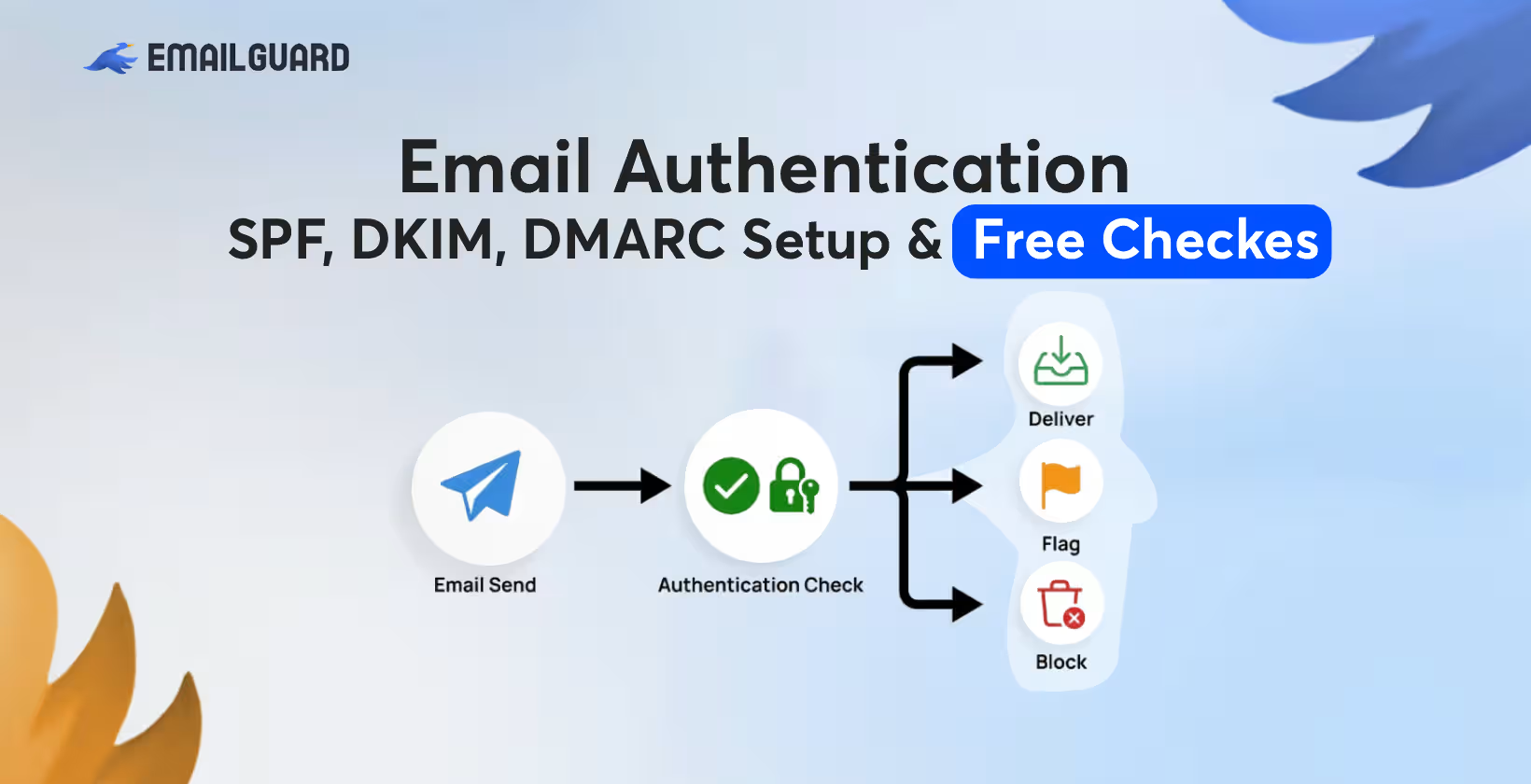
Email authentication has become a critical part of maintaining sender reputation, protecting domains from spoofing, and improving email deliverability.
Maintaining healthy email infrastructure is essential for protecting domain reputation, improving deliverability, and preventing authentication problems. EmailGuard and MXToolbox both provide tools for monitoring and troubleshooting email health.
MailGenius finds spam issues fast when you run a test. EmailGuard finds them without being asked. Most senders discover a broken DKIM key or a fresh blacklist listing only after a campaign has already gone out.